
“On the first page of our story, our future seemed so bright. Then this thing turned out so evil, I don’t know why I’m still surprised. Even angels have their wicked schemes, and you take that to new extremes, but you’ll always be my hero even though you’ve lost your mind.”-Rihanna
You’re f%+king crazy!
You’ll never be enough for me.
I never wanted you.
I don’t owe you an explanation.
Yea, I dragged you through the mud. So what?!
Does it look like I give a shit?
Don’t you dare say a word.
-A smattering of statements made by hurt people who did their best to hurt me.
This country was founded by a group of pissed off frat boys who felt divinely entitled to rule the world; aka the Brads and Chads of Colonization. When they wrote We the people, what they meant was, we the the right people. The rest of us had long since been deemed disposable; human compost from which they’ve grown unfathomable fortunes. Quiet Luxury and Stealth Wealth carefully passed down from one curated generation to the next.
“Nobody trashes your name more than someone who’s afraid you’ll tell the truth.”-Clara’s Voice; Kaytee Gillis, LCSW-BACS

Hurt people have called me all kinds of names: cunt, whore, dyke, sick, psycho, stupid, selfish, liar, trash, bitch, witch, slut, etc. And, I know that’s barely scratching the surface when it comes to the hate speech humanity has endured. I’m not here to claim a personal prize at the trauma olympics but rather, burning to offer keys to every single one of us who’ve been living in cages imprisoned by shame, including the gilded cages of those hurt folks we call Brads and Chads.
That wasn’t a typo. I have some potentially shocking news: People who’ve abused, oppressed, manipulated, enslaved, maimed, killed or otherwise destroyed living beings do it because somewhere along the line, someone or something hurt them too. They include historically dominant classes. Can you imagine being told by your father that unless you blow up a country you’ll get kicked out of the castle? Or, if you don’t produce an heir you’ll be homeless? Or, if you don’t make a sex tape you can’t be on the family’s show? Rich people problems are no joke when you really think about it.
I’ve been trying to figure out and justify why I feel so compelled to get my memoir published. What’s the story I’m actually telling and why does it matter? While relentlessly researching the meaning of my book, I stumbled over the answer: I’m white trash who escaped and unlike every other rags to riches, bootstrap narrative, I don’t think any of us should have to endure self-abuse to live a life of dignity, autonomy and peace. I don’t consider myself special or pride myself for being mentally tough, and completely disagree with the notion that anyone should have to do what I’ve done to get out of poverty because it was essentially inhumane. And, I refuse to hide behind shame or gentrification, pretending the hell I’ve endured isn’t still out there taking its toll on millions of other people. That hell begins with Classism; the arbitrary construct that suggests only a select few get to truly live while the rest of us are left fighting for scraps.
We all deserve to live lives of safety, compassion, provision, love, belonging, beauty, comfort, joy and self-actualization. But this reality has yet to come to fruition.
When my mother was pregnant with me, a 19 year old unwed runaway, she was making less than $2 an hour at a Tupperware factory. Three years later I watched my father drive her head through a sheet rock wall. We were a family living in the projects, barely making ends meet because the Kings of Capitalism had determined we were the kind of people who weren’t deserving of living wages, PTO, childcare, healthcare, access to mental health services, safe housing or a seat at their beautiful table.
I’m not justifying my father’s behavior but I’m also not ignorant to the effects of untreated childhood trauma in the pressure cooker of systemic oppression. You’d think all those guys with Ph.d’s studying the neurobiology of stress would recognize what’s going on in the world and write some policies that actually promote collective nervous system regulation but alas, they can’t seem to live without 24/7 indentured nannies, mistresses, masseurs, landscapers, personal assistants, butlers, drivers, plumbers, contractors, interior decorators, painters, roofers, pool boys, baristas, private chefs and maids; aka slaves.
Nancy Isenberg wrote White Trash; The 400 Year Old Untold History of Class in America in 2016. Similar to Isabel Wilkerson’s Caste; The Origin’s of Our Discontent, these masterpieces pulled back the curtain on systemic oppression. And yet, here we are on the brink of another recession fueled by the special interests of the 1%. Oh, they’re special alright. And they have the titles to prove it:
Varsity, Mega Cum Loud, Valedictorian, First, King, Queen, Duchess, Prince, Princess, Lord, Lady, Master, Head Master, Lead, Liege, Pimp, Madame, Emperor, Empress, God, Goddess, Sire, Lord, Earle, Count, Viscount, Countess, Pharaoh, Sultan, Brahmin, Courtier, President, Grand Pooba, Champion, Stud, Marquess, Grand Duke, Tsar, Basileus, Infante, Socialite, Doctor, Lawyer, Executive, CEO, CFO, VP, Senior Management, Expert, Elite, V.I.P
As Nancy highlights in White Trash, labels given to throw-away white folks are a little different:
Waste, Scallawag, Redneck, Hillbilly, Trailer Trash, White N$&@rs, Swamp Rabbit, Squatter, Rascal, Degenerate, Slob, Crackers, Untouchable, Worthless, Worker, Peasant, Working Stiff, Scumbag, Vermin, Commoner, Trixie, Slut, Lazy, Moocher, Stupid, Stooge, Thief, Beggar, Trouble, Welfare Queen, Needy, Have-Not, Layman, Bum, Drunk, Bastard, Dumb, Dirt Farmer, Ghetto, Eggshell, Idiot, Basket Case, Loser
But words aren’t the only things that hurt us.
Classism is systemic domestic violence. It is the taproot in the jungle of intergenerational violence.

The National Domestic Hotline defines Domestic Violence as “a pattern of behaviors used by one partner to maintain power and control over another partner in an intimate relationship.”
Their definition goes on to say:
“Domestic violence doesn’t discriminate. People of any race, age, gender, sexuality, religion, education level, or economic status can be a victim — or perpetrator — of domestic violence. That includes behaviors that physically harm, intimidate, manipulate or control a partner, or otherwise force them to behave in ways they don’t want to, including through physical violence, threats, emotional abuse, or financial control.”
If families are the micro, countries are the macro. The same definition used to describe the ways in which one person can abuse another, equally describes the ways in which a paradigm of authority have been abusing the masses since the beginning of human history, starting with Classism.
Classism embodies every characteristic of The Cycle of Interpersonal Violence, Power and Control.
“Abusers are commonly motivated by devaluation, personal gain, personal gratification, psychological projection, or the enjoyment of exercising power and control.[1] The victims of this behavior are often subject to psychological, physical, mental, sexual, or financial abuse.”-source
The first tactic of any perpetrator begins with Grooming. They methodically Target their victims by sizing up the vulnerability of a particular individual. This tactic directly parallels the classification of human beings.
Some of us are Crème Brûlée and some of us are Jello.
As Julia Roberts explained to Cameron Diaz in My Best Friend’s Wedding, no matter how hard we try, one will never be the other.

And Jello will never really be Crème Brûlée. Despite moving from the lowest rung on the socioeconomic ladder to the lower middle, I’ll always be playing ketchup. Meaning, I’ve never owned property and I’m drowning in student loan debt but I have a couch, a chair, a bed, a car, clothes, food and a 401k with like $7 in it.
For one final bit of extra fun let’s break down the parallels between Domestic Violence and Classism using The Wheel of Power and Control, or as I like to call it, The Wheel of Misfortune:
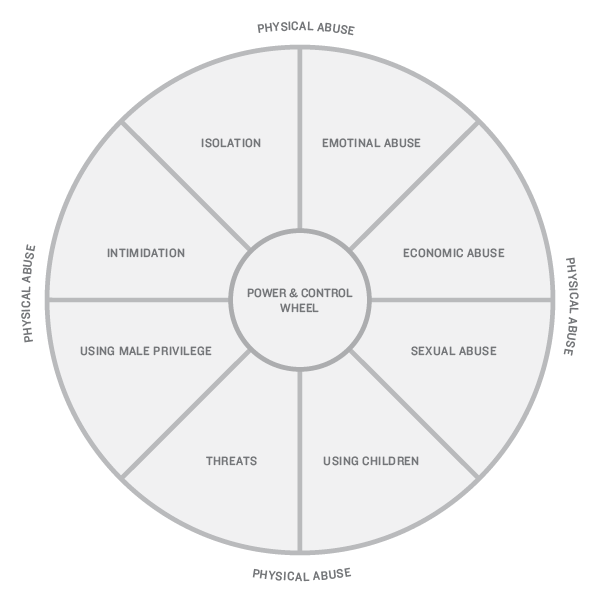
1. *Emotional Abuse includes behaviors like name-calling, humiliation, gaslighting, chronic monitoring of behaviors, neglect and shaming.
What names have you been called by a boss?
What labels have been used to describe you or a member of your family by the media or the government?
Have you ever seen someone like you portrayed as an unliked or ridiculed character in a film or tv show?
Have you ever expressed an unmet need and been told that beggars can’t be choosers?
2. Financial Abuse includes controlling how all the money is spent, running up large amounts of debt which victims may be accountable for, refusing to pay debt or money owed to the victim, forcing victims to work in the family or other businesses without pay or forbidding victims to work.
Think of the above examples and then consider the actions of our government and corporations.
You paid three trillion dollars for a war and didn’t even ask me?! Dude, those people are my friends and some of that was my money! I don’t want a war!
3. Sexual Abuse within a domestically violent relationship can include preventing access to reproductive care or sexual health services and education, forced, direct or indirect sexual exploitation sometimes as a means of survival or in exchange for basic needs, exposing victims to sexual material without their consent.
What type of reproductive care is available in your state?
What type of sexual health information were you taught in school?
Have you ever been exposed to a sexualized commercial or ad without your consent?
4. Use of Children within domestic violence children are often used a leverage or bargaining chips, particularly for financial gain or emotional control; such as through the use of guilt or manipulation. Children are also often used as messengers that result in emotional and psychological harm to the child.
Can you recall an ad or commercial for a service or product in which children were used to gain sympathy or convey a brand characteristic?
Can you recall a social or political campaign or movement in which children were used to deliver a particular message that the child or children would not have fully understood and therefore would not be capable of consenting to?
5. Threats or Verbal Abuse similar to emotional abuse, verbal abuse includes intimidation through name calling in addition to threats of harm of victims do not behave according to the will of the abuser. Verbal abuse may also include blame, screaming, raging, swearing or otherwise relentlessly terrorizing an individual.
Have you ever been called delinquent by a company attempting to collect a debt you had no ability to pay?
Have you ever experienced a person in authority screaming, swearing, yelling or threatening to harm you or a group you identity as a member of?
6. Use of Gender Privilege has historically referred to the abuse of male privilege but in the spirit of equity, I am including all genders as capable of utilizing aspects of their gender to exert abusive power, dominance or control over a victim. Examples might include insisting a partner display subservience against their will, acting as the authority within the relationship based on self-determined qualities or aspects of their gender identity.
Have you ever experienced a person in an authority position weaponize their gender as a means of gaining power or control over you or a group you identify with?
7. Intimidation refers to the subtle and sometimes not so subtle use of looks, threats, destruction of property, or withholding of resources to gain or maintain power and control over a victim. This includes the installation of fear as part of ensuring a victim remains silent about their abuse and that a victim does not fight back, or in any way assume that standing up for oneself is possible or allowed.
Can you recall a time when you felt scared after being called into a meeting with a boss?
Can you recall a time when you feared that you might lose your job, car, home, or access to essential services due to actions or decisions that were out of your control?
Can you recall a time where you were afraid to tell the truth about someone or something that hurt you?
8. Isolation includes the intentional and strategic separation of victims from the people, places and resources that might allow them to become safe or otherwise escape the relationship.
How often are you able to see family, friends or loved ones?
Do you get paid time off?
Can you afford to take vacations?
How accessible are community groups and services that are meaningful to you where you live?
How much education do you have access to?
*Each of these tactics can include physical abuse.
I realize I’ve attempted to take on a post-graduate sociology thesis in a blog post and, that all of the above can and does include every ism we can think of, but I had to get this out.
So as not to leave us all enraged and hopeless, the very good news is: truth is our pathway to freedom and peace. Just like the trajectory of The Hero’s Journey, enlightenment and every model of systemic change imaginable; at first we panic, then we find help and friends, then we ride out the mess and land someplace better from where we’ve been.
For now, welcome to the jungle.~
 Born in Providence
Your post stuns me. I think my hands are tingling. I’ve been on a quest, too. I also realize that there really won’t be enough pie for me. But like so many, I’m blinded by dumb optimism. Our only hope is to find the peace from within. I hope you are well. It must take a tremendous amount of personal energy to write this.
LikeLiked by 1 person
Thank you.
Glad to hear this hit home for you (hopefully in a good way)
I don’t think it’s dumb to live with optimism and hope.
I’ve found it helpful to understand more of the truth so I don’t end up losing hope; if that makes sense?
And yes, this post was a beast to write. And still not all I would like to say.
Thanks again for sharing your thoughts. 💜
LikeLiked by 1 person
😊 I had to let it simmer for a bit before replying. It had a strong emotional affect on me. A lot of your writing does that to me. It easily takes me into your mind. But I often worry about you. I know you’re past a lot of these things. But you certainly dive into the flow when you write. I can tell. I want to hear your life story!
LikeLiked by 1 person
For sure. This is a lot to digest. As always, I appreciate your thoughts and feedback.
No need to worry about me though again, I appreciate your compassion.
If these wounds were still open I couldn’t write about them.
Sent out another query this morning so that one day the whole story can be shared …for what it’s worth. Thanks B💜
LikeLiked by 1 person
💜
LikeLiked by 1 person
Good stuff, Elizabeth – always a pleasure to read. You’re one of those people who keeps working with the puzzle pieces. Love you, sis. Sending good thoughts. ♥♥♥
LikeLiked by 1 person
Thanks Sue. This particular piece felt like a lightning bolt.
Love you too sister. Sending good thoughts right back 💜
LikeLike